

Key Insight
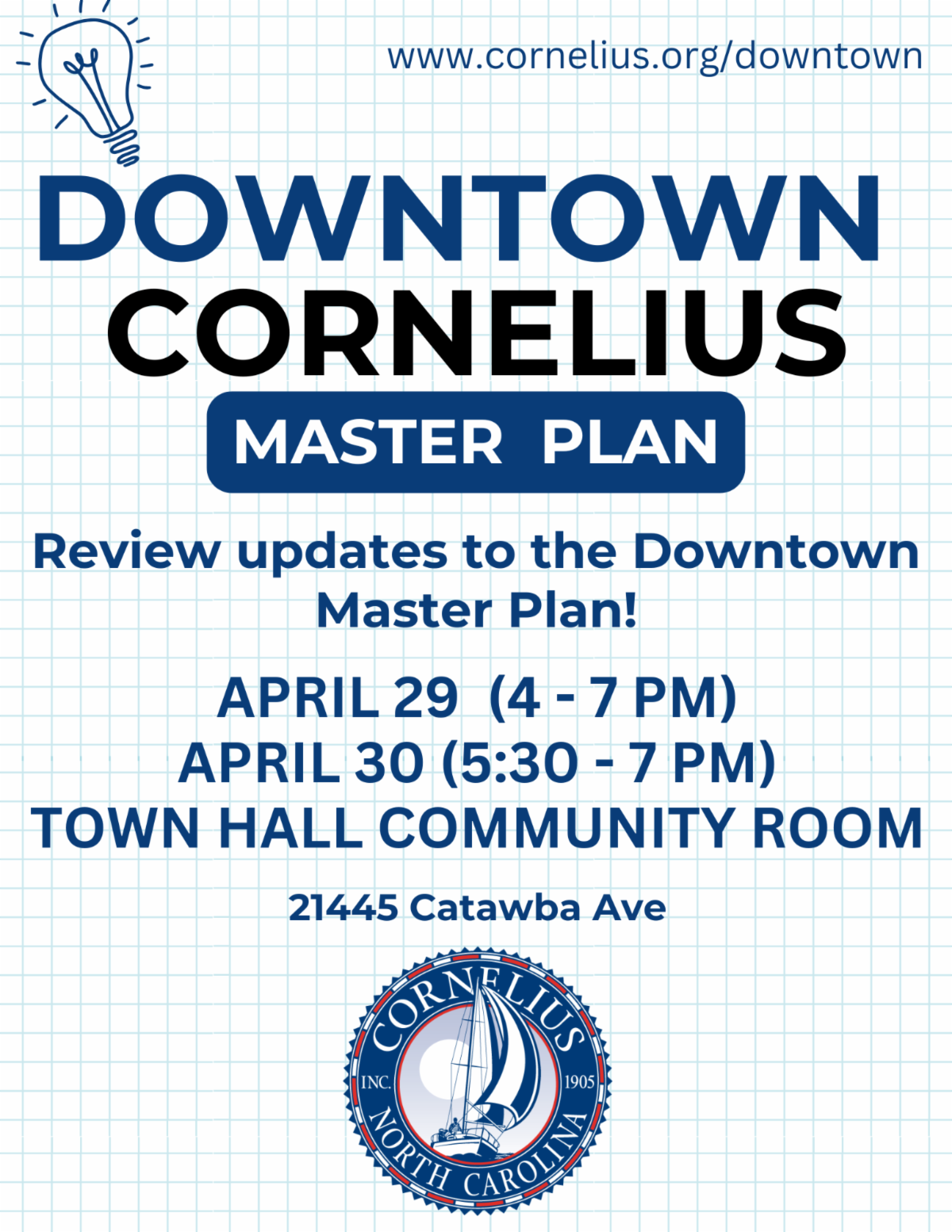
The Town of Cornelius is hosting two open-house style community meetings on April 29 (4:00-7:00 p.m.) and April 30 (5:30-7:00 p.m.) at Town Hall. The updated Downtown Master Plan focuses on transportation and implementation changes, and public input is still open before the Board of Commissioners votes on adoption later in 2026. You do not have to stay the whole time. You can drop in, look around, ask questions, and leave. It is that simple.

What you will get in this post
- What the Downtown Cornelius Master Plan actually is
- Why these April meetings matter and what to expect
- What the updated draft covers: transportation and implementation
- The big questions residents are asking, answered
- What neighborhood and property owners need to know
- How to participate and make your voice count
- What happens after the meetings and next steps
- Full FAQ covering what people are searching right now
1. What Is the Downtown Cornelius Master Plan?
The Downtown Cornelius Master Plan is a 25-year conceptual vision for the Old Town area. It is not a construction schedule. It is not a final approved project list. Think of it as a long-range roadmap meant to guide how the town grows, invests, and develops over the next two and a half decades.
The plan covers land use, transportation improvements, development character, branding, wayfinding, historic preservation, and implementation strategy. It is still in draft form and will not be adopted until later in 2026 after the Board of Commissioners completes its review and additional public comments are received.
The five core areas the plan addresses:
- Land use and development character to define what gets built, how it looks, and where it fits within the Old Town identity
- Transportation improvements to reduce congestion, improve walkability, and create better circulation around downtown
- Branding and wayfinding to help people find their way and give downtown Cornelius a more distinct identity
- Historic preservation to protect the character and landmarks that make Old Town worth caring about in the first place
- Implementation strategy to identify how and when ideas could actually be funded and executed
Pro Tip
A master plan is not law. It is guidance. Future decisions still require engineering studies, funding approvals, public process, and elected officials to vote. Knowing that distinction helps you evaluate the plan with the right perspective.
2. Why These April Meetings Matter More Than You Think
One thing I have always loved about Cornelius is that people here actually care about where this town is headed. Not just in a general way. People care about traffic, walkability, small business energy, and whether the updates being made respect the charm that brought them here in the first place. That is exactly why this meeting format is worth paying attention to.
The Town is not asking you to sit through a presentation. This is a drop-in open house. There are stations around the room with staff on hand to answer questions and take comments. You can stop in for 20 minutes on your way home from work and still have a meaningful conversation. For busy people, that format actually makes participation possible.
Meeting dates and times:
- Wednesday, April 29 from 4:00 p.m. to 7:00 p.m. at Town Hall Community Room
- Thursday, April 30 from 5:30 p.m. to 7:00 p.m. at Town Hall Community Room
- Drop-in format means you can arrive and leave at any point during the posted hours
- Town staff will be present at stations throughout the room to answer questions
- Written comments can be submitted at the meeting for the official record
It is always easier to shape a plan early than to complain about it later. Community meetings exist so the people who live here have a voice before decisions get made for them.
Coach Brock Zevan
3. What the Updated Draft Actually Covers
The April meetings are specifically focused on the newest version of the draft, which has been updated since earlier community engagement rounds. The biggest changes are in two areas: transportation and implementation. The Town made those updates to better reflect feedback it received from residents in previous sessions.
This is not a brand new plan being introduced for the first time. The larger 2050 Downtown Cornelius Master Plan has already gone through significant community input, collecting 571 participants, 746 written comments, and 3,730 data points across multiple engagement events. What you are seeing at these April meetings is the evolved version, refined based on what people have already said.
What residents have already shaped through prior engagement:
- 571 community participants across meetings, surveys, events, and office hours
- 746 written comments submitted for the public record
- 3,730 data points collected through the full engagement process
- Multiple community meetings, surveys, and public hearings have already shaped the current draft
- A focused art-and-connection vision for downtown that preserves Cornelius' small-town character while improving access and energy
Pro Tip: If you were not involved in earlier rounds of community engagement, these April meetings are your catch-up moment. Town staff will walk you through the key updates and explain what changed and why.
4. Transportation Changes: What the Plan Is Actually Discussing
Transportation is the section that gets the most attention and generates the most questions. Rightfully so. The way a downtown moves traffic affects everyone who lives near it, drives through it, or spends time in it. Here is a clear-eyed look at what the plan is considering and what it is not proposing.
Catawba Avenue and NC-115 remain identified as the primary streets for moving vehicle traffic through downtown. The plan is looking at ways to improve local circulation, reduce congestion points, and create better connections without pushing high volumes of traffic through residential neighborhoods.
Transportation ideas currently under discussion:
- Roundabouts at key intersections to improve flow without traffic signals
- A third central lane on Main Street / NC-115 as a possible option to reduce bottlenecks
- Realignment of Mulberry Street and Hickory / Gem Streets to improve circulation around the downtown core
- A festival street concept near the Cain Center that could allow Catawba Avenue to close for special events without disrupting through traffic
- Strategic local street connections designed to distribute traffic while keeping neighborhood streets low-speed and walkable
Key Insight
These transportation ideas are still conceptual. No engineering has been completed for these corridors and no final number of impacted properties has been identified. Before anything moves forward, further approvals and public process would be required. The meetings in April are your opportunity to ask questions about what these concepts would mean on the ground.
5. The Big Questions Residents Are Asking, Answered
When a plan like this goes from abstract to personal, the questions get very real very fast. People start asking what this means for their street, their morning commute, and the places their families already use. These are not cynical questions. They are fair ones. And the Town has addressed most of them.

What the Town says about the most common concerns:
- Will new major roads cut through neighborhoods? No. The plan does not propose new high-capacity thoroughfares through residential areas. The focus is on strategic local street connections that keep residential streets low-speed and walkable.
- Will 46 homes be taken? No defined number of impacted properties exists at this stage. The plan is still conceptual and no engineering has been completed. Any future property acquisition would require additional approvals and public process.
- Is the police station being relocated? No decision has been made and no funding has been set aside. The plan outlines a possible long-term scenario, not a confirmed action.
- Will the Cornelius History Museum be demolished? No. A proposed future street connection near Academy and Willow would be adjacent to the museum, not through it.
- Will the new elementary school push more traffic onto Academy Street? The school has not been designed yet, so no plans exist for driveways or parking. The Town says it will work with CMS to minimize neighborhood traffic impacts.
The real question is not whether you want downtown to improve. It is what that improvement actually looks like on your street, during your commute, and around the places your family already uses. That is a fair question, and you deserve a direct answer.
Coach Brock Zevan
6. What Cornelius Property Owners Need to Know
Even if you are not planning to move tomorrow, downtown planning conversations like this one matter for anyone who owns property in or near Cornelius. A well-executed downtown vision raises the energy, investment, and appeal of the surrounding market. A plan that misses the mark can do the opposite. Either way, the outcome affects your asset.
Downtown vitality is a real driver of surrounding home values. When people search on Google or ChatGPT for things like "best neighborhoods near Lake Norman" or "walkable towns near Charlotte," the answer is often Cornelius. That reputation does not happen by accident. It is built over time through exactly this kind of intentional planning.
How downtown planning quietly affects your property:
- Walkability improvements consistently rank as a top-tier home value driver in suburban markets near urban cores
- Event infrastructure like festival streets and improved Cain Center access attracts visitors and supports local businesses, which improves area desirability
- Traffic congestion management directly affects how livable a neighborhood feels on a daily basis and shows up in buyer feedback
- Mixed-use development character in a downtown core can attract younger buyers and investors, which broadens the buyer pool for nearby homes
- Historic preservation decisions protect the identity of Old Town, which is part of what makes Cornelius distinct from neighboring towns along Lake Norman
Pro Tip
If you are curious what your Cornelius home is worth in the current market, use Brock's Free Home Valuation Tool to get an instant estimate. Planning decisions like this are a good reminder to stay connected to your property's value over time.
7. How to Participate and Make Your Voice Count
The Town has set these meetings up to be as low-friction as possible. You do not need to register in advance. You do not have to present anything. You just have to show up. The open house format means you can walk in during any part of the posted hours, review the materials at different stations, ask questions directly to Town staff, leave written comments, and walk out.
If you cannot attend in person, keep an eye on the Town of Cornelius website for any digital comment submission options. Prior rounds of engagement have included online surveys and virtual office hours, and the Town has been committed to making participation accessible across different formats.
Tips for making the most of your time at the meeting:
- Come with a specific question about your street, neighborhood, or the part of the plan most relevant to where you live
- Ask for clarification on conceptual versus confirmed so you understand which elements are ideas and which are moving toward approval
- Write down your comments even if you also ask them verbally, because written input carries more weight in the formal record
- Bring a neighbor because collective feedback on a specific block or area tends to get more attention than isolated individual comments
- Stay informed after the meeting by visiting the Town of Cornelius website for updates on the adoption timeline and Board of Commissioners schedule
Pro Tip: Even 20 minutes at one of these meetings is more valuable than months of guessing what the Town is actually planning. Go hear it from the source, ask your question, and walk out with real information instead of secondhand rumors.
8. What Happens After the April Meetings
These April meetings are not the end of the process. After the community input from April 29 and 30 is collected, the Town will incorporate that feedback into the draft and continue working toward formal adoption. The Board of Commissioners still needs to review the plan and vote on adoption, which is expected to happen later in 2026.
Even after adoption, the plan remains a guidance document. Individual projects within it would each require their own feasibility studies, engineering work, funding sources, and additional public review before moving forward. Adoption of the master plan does not automatically trigger any construction or land acquisition.
The path from here to adoption:
- April 29 and 30 community open houses collect formal public input on the updated draft
- Post-meeting revisions incorporate comments and feedback into a refined version of the plan
- Board of Commissioners review is expected to continue through the remainder of 2026
- Adoption vote is anticipated later in 2026, after all comment periods and reviews are complete
- Individual projects within the adopted plan would each require their own separate approvals, funding, and community process before any work begins
Downtown plans shape how a place grows, how it functions, and how it feels. The people who show up and ask good questions early are the ones who actually get to influence the outcome. That is true in business, and it is just as true in civic planning.
Coach Brock Zevan
Quick Facts at a Glance
If you want a one-stop summary of the most important details before deciding whether to attend, here it is. Print this out, screenshot it, or share it with a neighbor.
- Two meeting dates: Wednesday April 29 (4-7 p.m.) and Thursday April 30 (5:30-7 p.m.) at Town Hall Community Room in Cornelius
- Drop-in format: No registration required. Come and go as your schedule allows.
- 25-year vision: The 2050 Downtown Master Plan is a conceptual long-range document, not an approved construction schedule
- What's being updated: Transportation and implementation sections, revised to reflect prior neighborhood feedback
- Adoption timeline: The Board of Commissioners is expected to vote on adoption later in 2026 after additional review
Helpful links from Brock
Frequently Asked Questions
- What is the Downtown Cornelius Master Plan?
It is a concept-level planning document guiding development and investment decisions in the downtown district over roughly the next 25 years. It covers transportation, land use, architectural character, branding, wayfinding, and implementation strategy for the Old Town area. - When is the Downtown Master Plan community meeting in Cornelius?
The Town of Cornelius is hosting two open-house meetings: Wednesday, April 29 from 4:00 p.m. to 7:00 p.m. and Thursday, April 30 from 5:30 p.m. to 7:00 p.m. Both are held at the Town Hall Community Room. - Do I have to stay the whole time?
No. The Town is running these as drop-in open houses. You can arrive and leave at any point during the posted hours without missing a formal presentation. - Is the Downtown Master Plan already final?
No. It is still in draft form. The Board of Commissioners is expected to vote on adoption later in 2026 after the April community meetings and further review. - Does this plan mean construction is starting soon?
Not necessarily. The plan is conceptual and not fully funded. Each individual project within it would require its own feasibility study, engineering work, funding source, and separate public process before any work could begin. - Will new major roads be pushed through neighborhoods?
The Town says no new high-capacity thoroughfares are proposed through residential areas. The goal is to improve local connectivity while keeping neighborhood streets low-speed and walkable. - Which roads are expected to carry most downtown traffic?
Catawba Avenue and NC-115 are identified as the primary streets intended to move vehicle traffic through downtown Cornelius. - What transportation changes are being discussed?
The plan mentions possibilities including roundabouts, a third central lane on Main Street / NC-115, and the realignment of Mulberry Street and Hickory / Gem Streets to improve circulation around the downtown core. - Will the Cain Center area be affected?
A portion of Catawba Avenue near the Cain Center is proposed as a potential future festival street, which could allow closures for special events while a better-connected secondary street system handles through traffic. - Will the Cornelius History Museum be demolished?
No. A proposed future street connection near Academy and Willow would be adjacent to the museum, not require its demolition. - Will 46 homes be taken for infrastructure?
The Town says there is no defined number of impacted properties at this stage because the plan is conceptual and no engineering has been completed. Future property acquisition, if ever needed, would require additional approvals and a separate public process. - Is Cornelius moving the police station downtown?
No decision has been made and no funding has been allocated. The plan outlines a possible long-term redevelopment scenario, not a confirmed project. - Will a new elementary school affect traffic on Academy Street?
The school has not been designed yet, so no formal plans exist for driveways or parking. The Town has committed to working with CMS to minimize traffic impacts on surrounding neighborhoods. - Has the public already had a chance to weigh in?
Yes. The planning process has included multiple community meetings, surveys, events, office hours, and hearings, generating 571 participants, 746 written comments, and 3,730 data points. The April meetings are the next round. - How does downtown planning affect Cornelius home values?
Downtown vitality, walkability improvements, and event infrastructure consistently influence surrounding home values and buyer demand. Plans like this shape how an area is perceived and invested in over time, which matters whether you are planning to stay or eventually sell. - Where can I find my Cornelius home's current value?
Use Brock's free home valuation tool at brokerbrockzevan.hifello.com for an instant estimate based on current market data.
What Clients Are Saying
Real results from real people working with Brock Zevan in the Cornelius and Lake Norman area.
★★★★★
"Passionate, kind and thoughtful. A knowledgeable professional who loves helping people. Sold Dad's home in Baileys Glen for top dollar and above asking price in less than a week. Moving out of state could have been very stressful but Brock and his team made us and Dad feel comfortable and at ease from beginning to end. Highly recommend."
Verified Client Lake Norman - Seller via Homes.com
★★★★★
"When deciding to sell our home we interviewed 3 agents, all 3 came back with the same listing price. We decided to go with Brock because of his preparedness, professionalism, and confidence. He listed it for $150,000 more in a cooling market. We had a lot of traffic and after 30 days we were under contract for full asking! We cannot thank Brock and his team enough."
Verified Client Cornelius Area - Seller via Zillow
★★★★★
"If it was not for Brock Zevan I could not have closed on my new home in Charlotte, North Carolina. He made an uncertain process a success at the end. The best Realtor in Charlotte. You will not be disappointed. Brock Zevan is the best at what he does."
Verified Client Charlotte, NC - Buyer via OneReal
Final thought
Downtown plans shape how a place grows, how it functions, and how it feels over the next 25 years. If you care about Old Town Cornelius, your neighborhood, or what your property is worth long term, it is worth stopping by on April 29 or 30 and being part of the conversation. And if you want to know exactly where the Cornelius market stands right now, call Brock at 704-345-3400 or reach out below.
Brock Zevan | License #256028 | Real Brokerage LLC | Serving Charlotte Metro and Lake Norman, NC | 704-345-3400 | brokerbrockzevan.com. Information in this post is based on publicly available Town of Cornelius planning documents and community communications. All planning details are subject to change as the master plan process continues. This post is for informational purposes only and does not constitute legal, financial, or real estate advice.
FROM OUR BLOG


Pros and Cons of Living in Statesville, NC
Iredell County Living Pros and Cons of Living in Statesville NC Statesville gives you more space, practical road access, and a real community feel at a more approachable price. Here is the honest version, with the tradeoffs buyers wish they knew before moving. Brock Zevan·Real Brokerage LLC·April 20

Pros and Cons of Living in Huntersville NC
Lake Norman Living Pros and Cons of Living in Huntersville, NC Huntersville gives you Charlotte convenience plus Lake Norman lifestyle. Here is the honest version, with the tradeoffs most buyers wish they knew before moving. Brock Zevan·Real Brokerage LLC·April 2026·9 min read Free Buyer Game Plan T
Pros and Cons of Living in Mooresville NC
Lake Norman Living Pros and Cons of Living in Mooresville, NC Mooresville gives you lake life, a real downtown, and Charlotte access in one package. Here is the honest version, with the tradeoffs most people find out after they move. Brock Zevan·Real Brokerage LLC·April 2026·9 min read Free Buyer Ga